
Garage Door Opener
Garage door opener acting up? Marion Garage Door diagnoses and repairs opener problems—from remotes and sensors to worn gears and failing motors.
Reliable Garage Door Opener Services In Marion, NY
Garage door openers rarely stop working without warning. The signs usually begin subtly. The motor hums but the door hesitates. The opener clicks repeatedly. Sometimes the door moves halfway and then reverses. We usually see this when internal components inside the opener are beginning to wear down. Most homeowners describe the problem in simple terms.
The remote stops working consistently. The door gets stuck halfway. Sometimes the opener runs but the door doesn’t move at all. Behind those symptoms, the cause is usually mechanical or electronic wear inside the opener system. If your opener has started behaving that way, you can call Marion Garage Doors at 315-926-6094 and we’ll talk through what you’re seeing and what usually causes those symptoms.
Why Garage Door Openers Start Failing
A garage door opener is essentially a small electric motor connected to a drive system and a control board.
Each time the opener runs, the motor turns a chain, belt, or screw drive that pulls the trolley along the rail to move the door. Over time, the mechanical components inside the opener begin wearing down. One of the most common failures occurs when the internal drive gear begins stripping. The motor still runs, but the door does not move because the gear teeth that transfer power to the drive system have worn away. Homeowners often describe this as the opener “spinning” or “humming” without lifting the door.
If you hear the motor ‘spinning’ but the door isn’t moving, it’s usually a stripped internal gear. When we open the motor housing in these cases, we often find fine plastic shavings scattered inside—those shavings are the literal teeth of your drive system that have worn away under pressure. Voltage spikes, lightning strikes, or power surges can damage the logic board that controls the opener’s movement and safety functions. In our experience, these symptoms often point to damage caused by storms or electrical fluctuations, showing up as delayed responses, flashing indicator lights, or intermittent remote operation. Once electronic components inside the opener begin failing, the system often behaves unpredictably.
Complete Garage Door Solutions
From quick fixes to full installations, we offer a complete range of residential and commercial garage door services. Whatever your door needs, we’ve got it covered with expert care and honest service.
What To Expect When We Diagnose an Opener Problem
When diagnosing an opener problem, the first step is determining whether the issue originates with the opener or the garage door itself.
Checking the Door Balance First
A garage door opener is designed to guide the garage door, not carry its full weight. The spring system above the door is supposed to do the heavy lifting. What happens next is often where the real problem appears. During our diagnostic checks, we frequently find that a broken spring has forced the opener motor to carry the door’s full weight. When that happens repeatedly, the extra strain can strip the opener’s drive gear or overheat the motor. In other words, the opener becomes the victim of a door system failure.
Inspecting the Drive System
Once the door balance is confirmed, the opener’s drive system is inspected. Chain, belt, and screw drive openers all rely on a drive gear and sprocket assembly inside the motor housing. Over time that gear can wear down or become damaged under heavy strain. When the gear teeth begin breaking apart, the motor may continue running while the drive system slips. This is often the grinding or rattling sound homeowners start hearing.
Testing Sensors and Electronics
The opener’s safety sensors are another frequent source of problems. These photo-eye sensors sit near the bottom of the door tracks and prevent the door from closing if something crosses the beam. Over time, vibration from normal door movement can slowly shift those sensors out of alignment. When that happens, the opener may reverse unexpectedly or refuse to close the door.
If you’re unsure whether the problem is with the door or the opener, you can reach us at 315-926-6094 and we’ll help you sort out what might be happening.
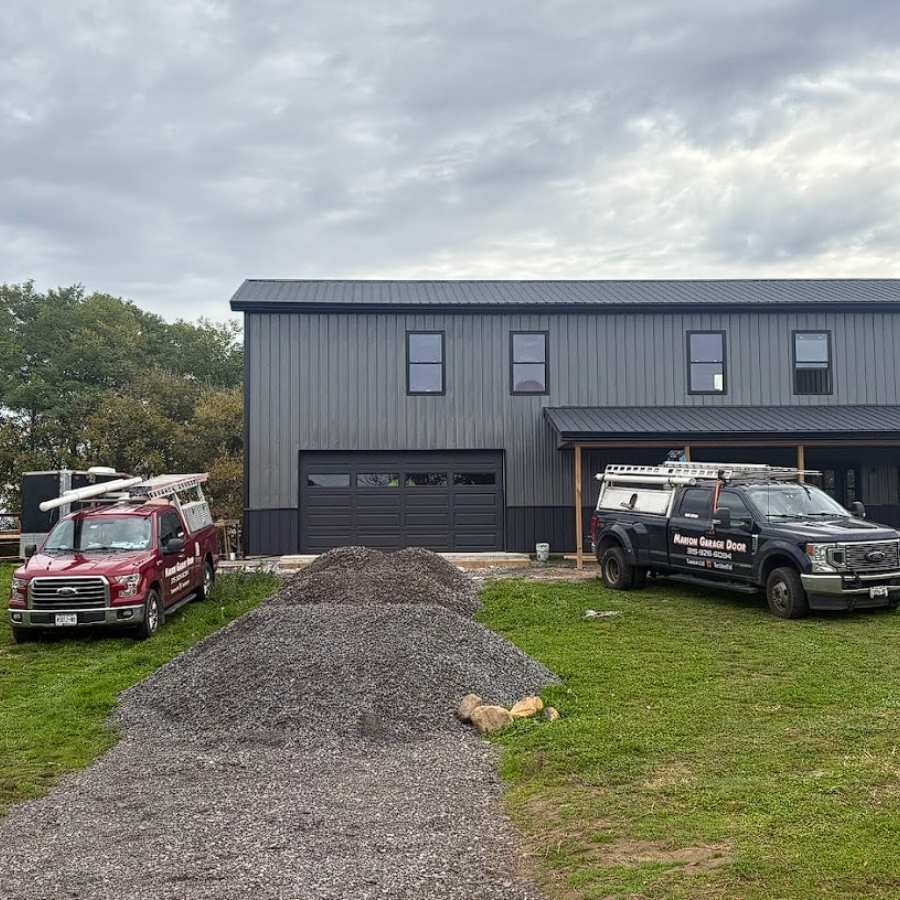
When Installation Becomes A Safety Issue
Garage door openers include safety systems designed to prevent accidents.
When those systems stop functioning correctly, the door can behave unpredictably. Once that type of failure begins, it rarely resolves on its own. One safety concern involves the automatic reversal system. If the photo-eye sensors or internal control electronics fail, the opener may no longer detect obstacles beneath the door. We usually see this when sensors are misaligned or when internal electronics stop processing the signal correctly.
Another safety risk appears when homeowners pull the emergency release cord while the door has a broken spring. Without the spring supporting the door’s weight, the door can suddenly drop because the opener was the only thing holding it in position. That situation can allow a heavy door to free-fall unexpectedly.
Which Opener Drive Type Is Right for Your Wayne County Home?
Chain drive — the traditional, reliable standard. Best for detached garages where noise level is less of a concern. Lowest cost.
- Belt drive — rubber belt operation is significantly quieter than chain drive. Recommended for attached garages, especially those connected to living space or below a bedroom — common in the split-level and colonial homes throughout Wayne County’s residential neighborhoods.
- Direct drive — the motor travels the stationary chain, creating the quietest operation of any drive type. Premium option with minimal maintenance requirements.
- Smart/Wi-Fi openers — myQ-enabled openers from LiftMaster and Chamberlain allow remote access, activity logs, and smart home integration. Particularly useful for seasonal-use properties near the Lake Ontario shoreline within our service area.
Your Local Garage door Experts—Right Where You Need Us
Your Neighborhood Garage Door Team
At Marion Garage Door, we don’t just serve customers—we serve neighbors. From small towns to growing cities, we bring trusted garage door repair and installation to homes and businesses throughout the region. If you’re nearby, chances are we’re already working in your area.
Frequently Asked Questions
Why does my garage door opener run but the door doesn’t move?
This usually means the internal drive gear has stripped. The motor operates, but the plastic gear connecting the motor to the drive shaft has worn smooth.
Why does my garage door keep reversing when it closes?
The photo-eye safety sensors are likely misaligned, dirty, or blocked. When the invisible infrared beam is broken, the opener automatically reverses for safety.
Can cold weather affect garage door openers?
Yes. Cold temperatures thicken grease inside the drive rail and cause steel springs to stiffen. This extra resistance can trip the motor’s internal thermal overload switch, shutting it off to prevent overheating.
How long do garage door openers usually last?
Most residential openers last between 10 and 15 years with routine maintenance and proper spring balance.
Should I repair or replace my opener?
If your opener is over 15 years old, lacks modern safety sensors, or has a burned-out motor, replacement is usually more cost-effective than replacing individual electronic boards.
Call Us If Your Garage Door Opener Is Starting to Fail
Garage door openers usually give warning signs before they stop working completely. The motor becomes louder, the door begins reversing unexpectedly, or the opener responds inconsistently to the remote. Once those signs appear, the system is often approaching a mechanical or electronic failure.
If your opener is starting to behave that way, call 315-926-6094 and we’ll help you figure out the next step for your garage system.
Your Garage Door Solution Starts Here
Whether you need a quick repair or a brand-new garage door, our team is here to help. Fast, reliable, and always local.